

From the moment the sounds of the Caribbean’s vibrant rhythms first echoed down Notting Hill’s streets, the festival became a living testament to Black resistance, expression, and unity.
This weekend, as we honour and continue its legacy, we celebrate the Caribbean-born visionaries whose creativity, courage, and culture laid its foundations.
Claudia Jones has long been credited as the Mother of Notting Hill Carnival. There are plaques in Notting Hill and at The Tabernacle, home of the carnival, honouring Claudia’s efforts to bring the culture she grew up with in Trinidad & Tobago to the UK, encouraging unity, cultural pride, and celebration in her community. This resilience in the face of discrimination and oppression became the cornerstone of what is now the biggest street party in Europe. However, there are many more names and pioneers involved in the Notting Hill Carnival Story.
Claude Vera Cumberbatch aka Claudia Jones
Claudia Jones worked tirelessly in support of Caribbean communities in London. She set up Britain’s first Black newspaper, The West Indian Gazette, in 1958 and organised anti-racism campaigns before curating Britain’s first Caribbean Carnival as a response to rising tensions and race riots in the Notting Hill area.
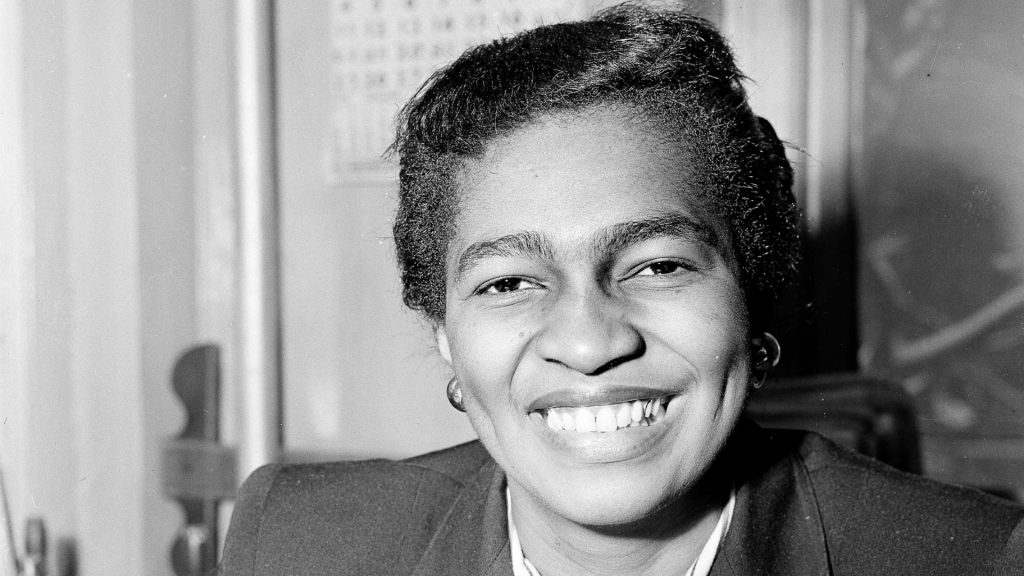
The first Carnival was said to have been held in Camden Town Hall in January 1959, coinciding with the Caribbean festival season. Staged at an indoor venue, perhaps due to the weather or lack of permission for an outdoor event, the carnival featured steel bands, calypso singing, dancing, costumes, a beauty pageant, and food. The event was a very successful, well attended, and ran at venues across London for five years. This was the mustard seed that bloomed into the Notting Hill Carnival that still thrives today. Claudia Jones passed away in 1964.
Russell Henderson’s Steel Band at The Notting Hill Fayre
Trinidadian Russell Henderson and his pan band members; Sterling Betancourt, Vernon “Fellows” Williams, Fitzroy Coleman, and Ralph Cherry, became popular within the Caribbean community, regularly performing at the indoor carnival events.
Local Russian activist Rhaune Laslett invited Russell Henderson and his band to perform at her first multi-cultural outdoor children’s event, ‘The Notting Hill Fayre’ in 1966, organised with London Free School. The event featured local residents from the African and European communities, Nigerian musician Ginger Johnson and his group the Afro-Cubans; Agnes O’Connell and her Irish Girl Pipers; and a white New Orleans-style marching band. Russell and his band were the only Caribbean musicians invited to perform. At the end of the event, Russell and his band members continued to play as they walked down Portobello Road followed by a trail of locals who had gathered and danced in the street to the sound of pan.

Local Russian activist Rhaune Laslett invited Russell Henderson and his band to perform at her first multicultural outdoor children’s event, The Notting Hill Fayre, in 1966, organised with the London Free School. The event featured local residents from African and European communities, Nigerian musician Ginger Johnson and his Afro-Cubans, Agnes O’Connell and her Irish Girl Pipers, and a white New Orleans-style marching band. Russell and his band were the only Caribbean musicians invited to perform. At the end of the event, they continued playing as they walked down Portobello Road, followed by locals dancing in the street to the sound of pan.
That spontaneous procession of revellers down Portobello Road is credited as the first outdoor Notting Hill Carnival. Caribbean musicians had brought their culture into the streets of London, and from that moment, the event began growing into what is now attended by over two million people annually.
By 1970, Notting Hill Carnival consisted of two music bands: the Russell Henderson Combo and Selwyn Baptiste’s Notting Hill Adventure Playground Steelband, with around 500 dancing spectators.
Sonny Blacks
Trinidad-born impresario Sonny Blacks had always been involved in the arts and culture of Trinidad, especially Carnival, Calypso, and Steel Pan. In 1968, he set up the Carnival Development Committee, the first official organising body for Notting Hill Carnival.

Interlude: Police and Thieves in the Streets
Notting Hill Carnival lost community control in the 1970s due to intense conflict with the police, particularly the 1976 riots, which led to a larger, more confrontational police presence. The 1970s were a period of heightened racial tension and economic hardship in Britain, with growing public scrutiny of and hostility towards the Afro-Caribbean community.
This heavy-handed policing was partly fuelled by the use of the “sus” law (a precursor to today’s Section 60), which allowed police to stop and search anyone suspected of intending to commit a crime. It disproportionately targeted Black Londoners and created deep distrust between the community and the authorities. The police sought to assert control over the streets and suppress unrest, which diminished the community-led nature of the event.
In 1976, following disturbances in previous years, police adopted a militarised strategy, increasing their presence and using aggressive tactics that inflamed tensions, leading to riots. The media’s coverage of the events reinforced harmful racial stereotypes about young Black men and the Caribbean community.

The confrontations led to greater state involvement, which diminished the community’s ability to control the carnival’s direction and character. As the police and authorities tightened their control, the event, which began as an expression of cultural unity and resistance by the Caribbean community, became subject to greater scrutiny and commercialisation.
The state and police sought to take back the streets from what they perceived as a turbulent event, imposing order on the carnival and pushing back against its organic, community-driven roots.
Leslie “Teacher” Palmer
Trinidadian Leslie “Teacher” Palmer served as director of the Notting Hill Carnival from 1973 to 1975 and was a major catalyst for its transformation into the modern carnival we know today. He formally introduced masquerade bands (Mas) into the street parade, ushering in the costumed spectacle first introduced by Claudia Jones in 1959 and the main aspect which defines Carnival today as a fully traditional Caribbean event.
He expanded the event beyond its mostly Trinidadian roots to include representation from other islands such as Jamaica, which didn’t have its own carnival but contributed significantly through its long history of pioneering reggae music. Leslie also introduced stationary sound systems in 1973, which became a key feature of the carnival, bridging cultures and encouraging diversity.

Palmer secured sponsorships, brought in more steel bands, introduced generators, extended the route, and recruited costume pioneers such as the legendary Guyanese-born ‘Mas Man’ Peter Minshall. Attendance surged from 3,000 at the beginning of the 1970s to over 50,000.
The Notting Hill Peoples Carnival was transformed into a festival of Caribbean music and traditions.
Lawrence and Joan Noel
Thousands of colourful costumes have been created at Lawrence and Joan Noel’s house in Leytonstone since 1973, when Mr Noel is credited with bringing the first costumes to the west London event. With just three weeks’ notice, he produced 40 costumes with the help of his wife and friends Brenda Riley and Rudolph Roberts, who worked day and night to complete them. The family’s costumes appeared at every carnival for over 30 years.

Duke Vin and Reggae’s Influence
Vincent George Forbes, better known as Duke Vin, was a Jamaican-born sound system operator and selector who ran the first sound system in the UK. His sound, Duke Vin The Ticklers, debuted at the carnival in 1973 and played for 37 years, profoundly influencing the spread of reggae and ska in Britain.

Rhodan Gordon
Born in Grenada, Rhodan was known as one of the Mangrove Nine, a group of Black activists tried for inciting a riot at a protest against the police targeting of the Mangrove Restaurant, Notting Hill. The trial lasted 55 days, and the jury deliberated for more than eight hours before all defendants were cleared of the main charge with Gordon along with Rupert Boyce, Anthony Innis and Altheia Jones-LeCointe receiving suspended sentences for lesser offences, including affray and assaulting police officers. Their story has been immortalised in Small Axe an award-winning film by Steve McQueen.

In 1977, Rhodan was instrumental in returning the Notting Hill Carnival to community control, helping form the Notting Hill Carnival Arts Committee. In 1979, he co-founded the Notting Hill Carnival Industrial Project, which trained African-Caribbean youth in vocational carnival arts skills.

The Work and Legacy continues
As we enter the 59th year of Notting Hill Carnival, we must remember those who worked tirelessly to bring Caribbean culture to the streets of London, not only as a celebration but as a form of protest against the negative stereotypes and imagery imposed on a community built on resistance against oppression. A community that transforms revelry into revolutionary action.
As we look back the the pioneers and honour their legacy, we must always remember their spirit and replicate it by ensuring Notting Hill Carnival remains as they intended, a display of culture, traditions and resilience, Caribbean sounds, bright costumes, happy revellers on the streets of London.