

Gold Gerry is a Nigerian filmmaker, screenwriter and producer …
She is also the founder of Melon House Production, an independent entertainment company dedicated to telling stories rooted in culture, identity and human experiences.
Her career spans writing, production and creative development, including working as a writer’s assistant in a Netflix writers’ room and as a producer with Nemsia Studios. Through Melon House, she is committed to championing emerging creatives and bringing underrepresented stories to the screen.
Her latest project, Adanne, is a Nigerian family drama exploring the lives of three generations of Igbo women navigating family expectations, inherited traditions and the complexities of womanhood.
Directed by Orobosa Ikponmwen in her feature directorial debut, the English and Igbo-language film stars Mmesomachi Chilaka, Onyinye Odokoro, Kelvinmary Ndukwe and Jennifer Umenwa.
We caught up with Gold to discuss Adanne, the challenges of independent filmmaking, trusting creative visions and telling authentic Nigerian stories.
Please introduce yourself:
Hello, my name is Gold Gerry. I’m a film writer and producer, and I’m the founder of Melon House Production, an independent entertainment company focused on telling stories that reflect our cultures and experiences.
Describe your life in one word or a sentence.
Becoming.
I feel like I’m constantly becoming – as a filmmaker, as a creative, and as a person. I’m learning, making things, figuring things out and hopefully becoming a little better with every project.
Why are we here?
Well we’re here to discuss my feature film Adanne.
Tell us what Adanne is about in your own words.
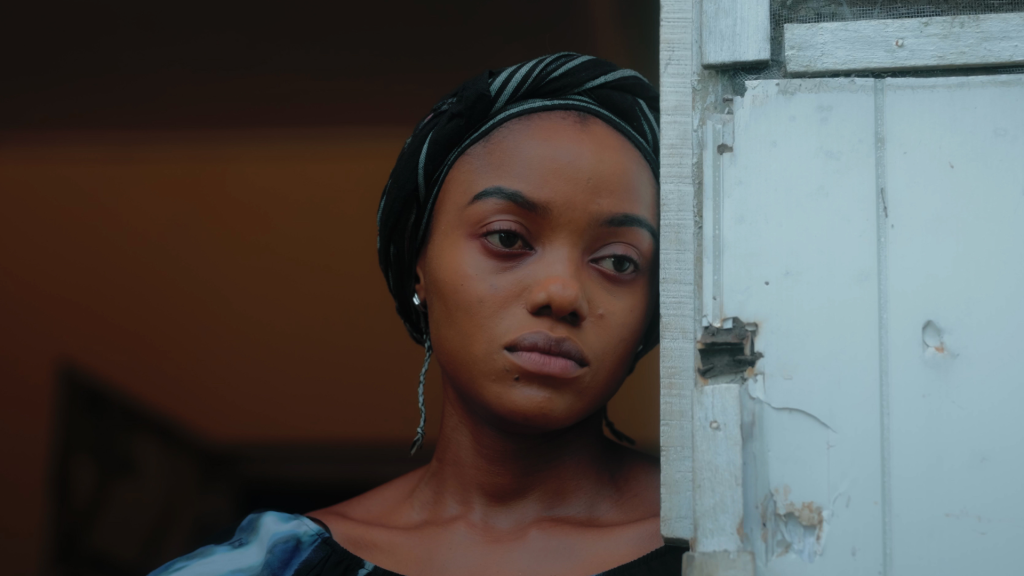
Adanne is the story of three women connected by blood and by the experiences they inherit from the family they’re born into.
They live in a world where expectations of women are very different from those placed on men. We watch each woman navigate those expectations, sometimes resisting, sometimes adapting and sometimes finding her own way.
At its heart, Adanne is really about family, womanhood, and the things we inherit from the people and cultures that come before us.
Where’d this story come from?
I came into writing Adanne through the lens of the relationship I have with my mum. Growing up as the first daughter in my family, I often felt quite alone, and I realised quite early on that my experience of my parents was very different from the experience my siblings had.
I’ve always found mother-daughter relationships really interesting because they can be complex and fractured, but still hold so much love. That tension was something I wanted to explore in Adanne, what happens when love exists alongside hurt, expectations, misunderstandings and the things we inherit from the women who came before us.
A scene or a line that best captures why you agreed to make this film.
There’s a scene Lotanna Nwose (the producer) calls “the humiliation scene” where everyone looks on, and no one bats an eye. It makes me always remember there can be love or hate or both at home, and most times we are not in charge of what we actually get as children; that helplessness can be profound.
What made you confident this was Melon House’s right debut feature?
While writing, I checked in with mentors and a script editor for an outside perspective. After about a year, we brought together professionals from film, theatre and production to read the script and give honest feedback.
The energy in that room confirmed we had something worth making. People connected with the story, challenged certain things and sparked real conversations. That gave us the confidence to make Adanne our debut feature.
How immersed were you in shaping the script’s themes of legacy, silence, and inherited expectation before production began?
Those themes were at the heart of why I wrote Adanne. I was interested in how expectations are passed down almost silently, through what we’re taught, what we’re not allowed to question and what we see our mothers and grandmothers accept.
During development, conversations with the director, cast and others helped me realise that we didn’t need to explain everything. I wanted audiences to feel the weight of what these women had inherited without having it all spelled out.
How did the screenplay evolve during development, and what were the key conversations that shaped its final form?
The script has had and probably always will have different versions.
It evolved from something that was very personal to me into a screenplay that needed to be experienced by an audience that might not necessarily be familiar with certain terms, cultural references or concepts that felt completely normal to me.
When our director (Orobosa Ikponmwen) came on board, we worked tirelessly on the structure and the way the story unfolded. We challenged each other quite a lot, which I think was important for the film.
Even our location search influenced the screenplay. We were looking for spaces that reflected the economic circumstances and the different periods of the story, and sometimes what we found or couldn’t find meant we had to rethink scenes or make changes. So the film really continued to evolve right up until we were on set.
Why was it important for the film to be performed in both English and Igbo?
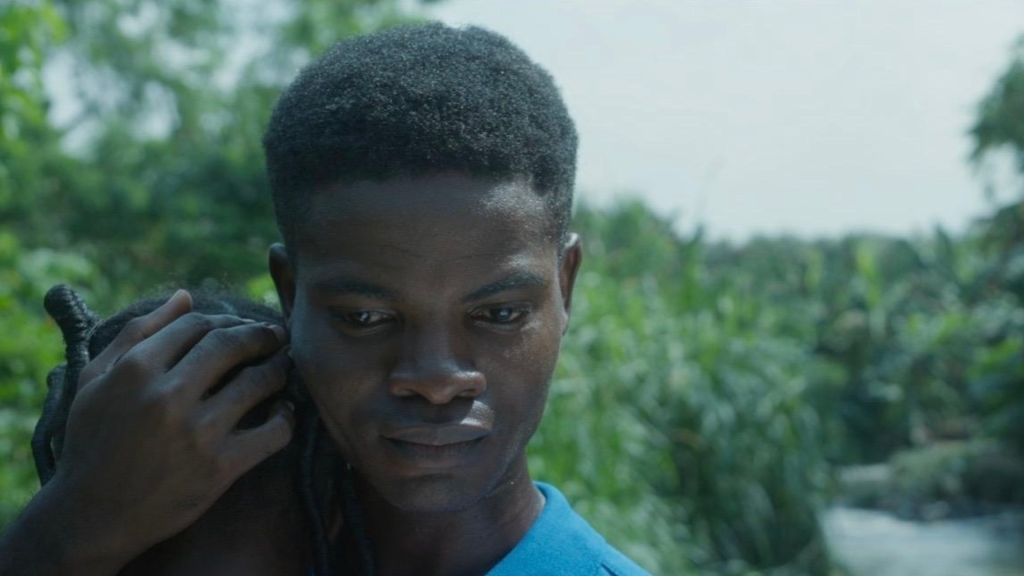
I was raised by Nigerian parents, so like a lot of Nigerian children, I grew up with my mother tongue being spoken at home. And because Adanne follows three generations of Igbo women, language became a really important part of understanding who these women are and where they come from.
My mum would actually joke about my Igbo pronunciation and call it “Engli-Igbo,” so I wanted to capture that too, especially for the modern-day character. I didn’t want everyone to suddenly sound like they had the exact same relationship with the language. The way we speak can tell you a lot about where someone has grown up, their generation and even their relationship with their culture.
We also don’t see enough Igbo stories reaching wider audiences. I hope Adanne can help open the door for more English and Igbo films and storytellers.
What was it like working with a first-time feature director, and how did you support her vision on set?
I approached Orobosa because I admired her work, but what gave me confidence was our shared vision. She immediately connected with the story and understood what I wanted to say. There was a real alignment in how we saw the characters, the themes and the world of the film, and that gave me a lot of confidence in trusting her with the story.
As the writer, I had to learn to let go of certain things and allow her to interpret the material through her own lens. As producer, my job was to give her the support and resources to execute that vision.
So the fact that it was her feature directorial debut wasn’t really something I was concerned about. I was more interested in whether she understood the story and whether I trusted her to tell it, and she did.
Mmesomachi Chilaka leads the film, alongside Onyinye Odokoro, Kelvinmary Ndukwe and Jennifer Umenwa. What was the casting process like for finding actors who could carry three generations of one family convincingly?
The casting process was quite tasking but very rewarding.
We started with Kelvinmary Ndukwe as Daniel before auditioning for the other roles. Mmesomachi Chilaka and Jennifer Umenwa stood out immediately. We invited Mmesomachi back, gave her more background on the character and she delivered perfectly.
Onyinye Odokoro was recommended to me. Orobosa and Lotanna already knew her work, but I knew she was right for Ijeoma from our first phone conversation. Her voice had the richness, depth and originality the character needed.
We wanted actors who naturally embodied the characters, not just performed them. Because the story spans three generations, physical resemblance, chemistry and cultural familiarity were important.
We also needed natural Igbo speakers who could deliver the dialogue authentically. So casting was really about finding that combination of performance, cultural familiarity, physicality and chemistry that would make these three generations feel like one family.

What were the logistical and emotional challenges of shooting on location in Ibadan, and how did the environment shape the film’s authenticity?
Although Adanne is set in Eastern Nigeria, we made the difficult decision to shoot in Ibadan rather than relocate the entire production. Finding locations that reflected Eastern Nigerian households was challenging, but our locations manager Adamson Ali and art director Omah Diary did an incredible job.
For the exterior scenes, Ibadan actually gave us a lot to work with. Ibadan’s red earth, hills and greenery also gave us a landscape similar to parts of Eastern Nigeria, particularly the village environments we wanted to evoke.
Emotionally, I’m usually in complete go-go-go mode on set. But seeing Onyinye Odokoro dressed as Ijeoma on our first day stopped me. She reminded me so much of my mum, and suddenly these characters I’d spent years writing were standing in front of me. That was when the reality of what we were making really hit.
What did financing an independent Nigerian family drama like this look like, and what advice would you give other producers trying to fund culturally specific stories?
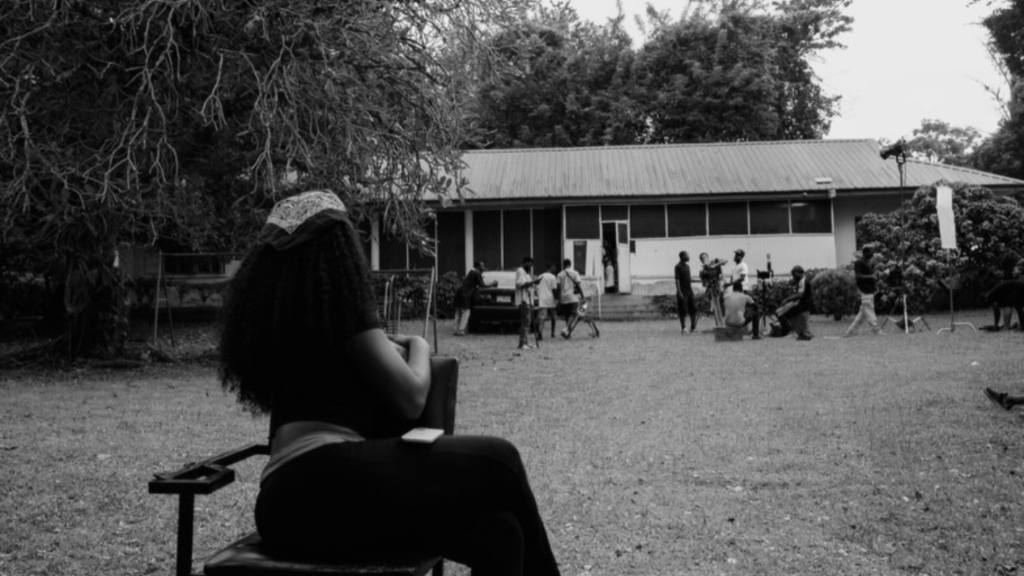
Financing Adanne looked a lot like almost draining our accounts to fund a dream we believed in. Some might call it madness, but we had to decide whether we were willing to take a chance on ourselves.
We also asked for help. Friends contributed what they could, even if it was just a few pounds, while people in our industry circles called in favours, offered services for free or worked at discounted rates.
Although independently funded, Adanne was never made alone. I’m particularly grateful to Lotanna, who’s always backed the things I do.
My advice is to apply for every grant and funding programme you’re eligible for. But if those opportunities don’t come through, ask yourself: what do I have, who’s around me and how can I build from there?
Finance is important, but the community around you can be just as valuable. Sometimes it’s about finding people who believe in the dream enough to help you carry it.
How do you navigate presenting a deeply Nigerian story to international audiences without diluting its cultural specificity?
For me, you don’t start with the international audience. You start with the story. There’s a temptation to explain or soften cultural elements for wider audiences, but you risk losing what makes the story interesting.
We wanted Adanne’s Igbo identity to remain intact, from the language and family dynamics to the humour and environment. You don’t need to explain every cultural detail if the emotional truth is clear.
I’m less interested in making Adanne universal by making it less Nigerian. I want audiences to connect with these women through the truth of their experiences.
Adanne is Melon House’s debut feature after shorter projects like Boo’d Up and Art Not Fashion. How does this film set the tone for the kind of stories Melon House wants to tell going forward?
I’m particularly proud that Adanne is Melon House’s debut feature because it really encapsulates the vision I had for the company when I founded it- reflecting cultures through storytelling.
We want to tell stories that challenge audiences to look within themselves and, hopefully, have difficult conversations with one another. Stories that make people feel seen, but can also introduce audiences to experiences that may be different from their own. We want Melon House to be a voice and a platform for people whose stories aren’t always given the space they deserve, whether that’s young people, older generations or communities that are often marginalised or underrepresented.
Ultimately, I don’t want us to make stories simply because they fit neatly into what’s commercially safe. I want us to make stories because there is something human and meaningful in them that deserves to be told. Adanne is a very good example of that, and I think it sets the tone for where we want to go next.
GETTING TO KNOW …
If not a filmmaker, you’d be? I wasn’t a filmmaker, I’d surely be a fashion stylist. I love clothes, putting looks together, and playing with patterns and structure.
What’s made you sad, mad, & glad this week? Sad: Realising how quickly time is moving. I feel like this year has flown by.
What are you watching? A Different World on Netflix. I literally just started last night.
What are you reading? Girls Will Be Girls by Emer O’Toole.
The last film you watched? Practical Magic 2.
The last play you saw? An Ideal Husband by Oscar Wilde
The last live music event? Beyoncé’s Cowboy Carter tour
What’s currently on your playlist, and pick a favourite song? Been listening to a lot of Sienna Spiro, Adela and Rosalia. My favourite song, however, at the moment is “Pure” by Sienna Spiro.
Which podcast are you listening to? None, actually. Podcasts aren’t really my favourite medium.
What’s on your bucket list? To be part of a TV writers’ room for Netflix or Amazon for seasons on end — ideally for at least five years. I really want to experience what it’s like to live with a story and a group of writers over a long period of time and see what that kind of collaboration produces.
Where’s your happy place? Music.
Celebrate someone else. My crew.
I’m genuinely so excited that we’re beginning our festival run and people can finally see the work they put into Adanne. We had such a cohesive and energetic set, and I think that translated onto the screen. From the costumes to the lighting, locations, performances and everything in between, everyone did such a fabulous job. So this moment really belongs to them too, and I want to celebrate that.
Celebrate yourself. I’m so proud of you, Gerry.
You went from writing short stories in pamphlets and making your own magazines to writing and producing a feature film, and now you’re getting interviewed by British Blacklist. You’re just getting started, and I want you to revel in that a little more.
What’s next? Honestly, I’m so zeroed in on Adanne and what she can be right now and in the near future that I’m not thinking too seriously about what’s next. I’ve just spent so much time making this film that I’m enjoying the moment and seeing where it takes us.
I’d love to collaborate with other creatives on films, television or ideas we come up with together, and I’d also love to explore creating for brands. But for now, I’m happy to let Adanne have her moment and see what comes from it.
Where can we find you? (socials) I’m available on Instagram @goldgerry
Where can we watch you at work? Adanne is heading into its festival run, so you can catch it at the All African Film Festival in Kigali on October 15th, and at the Women of the Lens Film Festival in London on November 20th.
And if you see me at either festival, please come and say hello. I’d absolutely love that.